
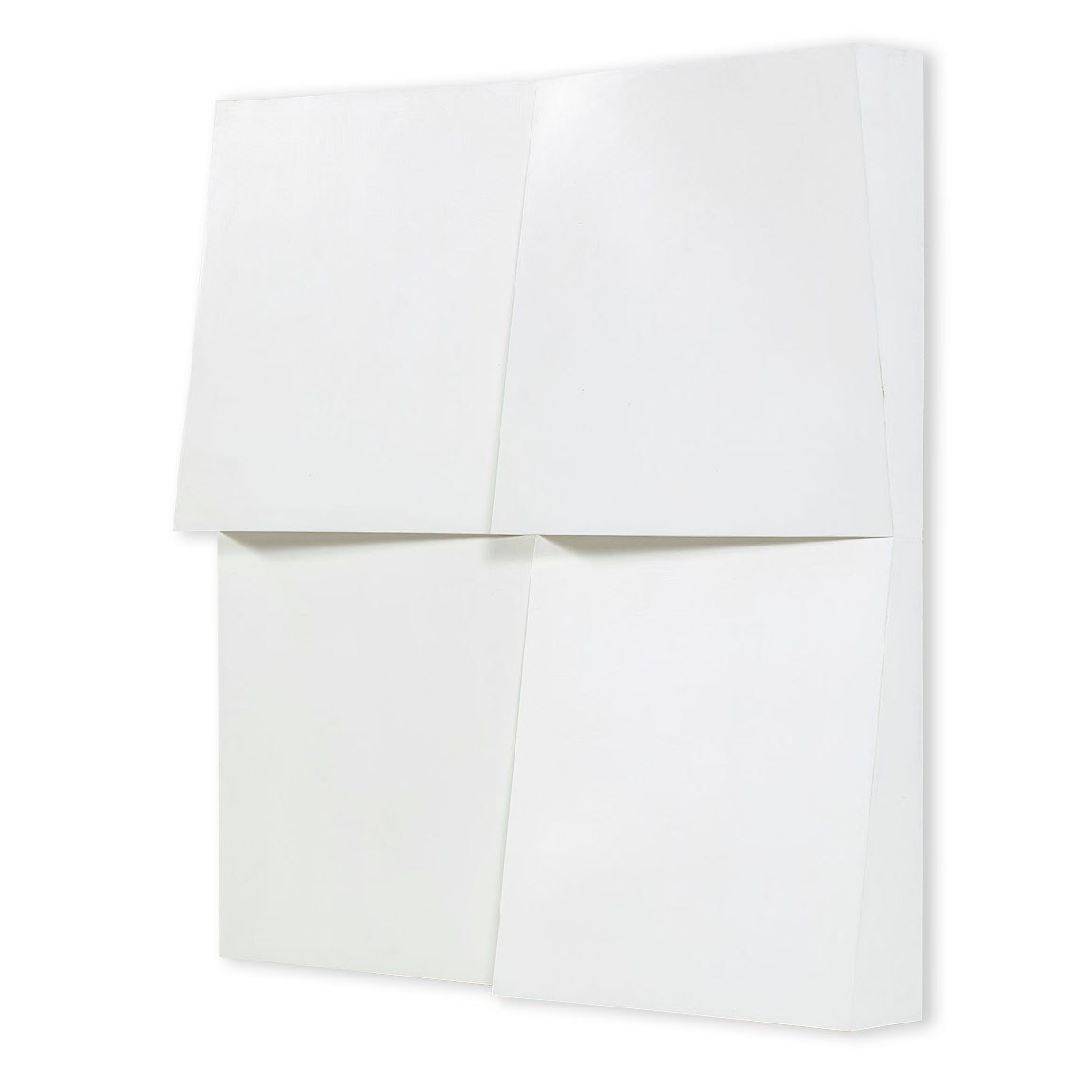

Dimensions: 82.5 x 81.5 x 11 cm
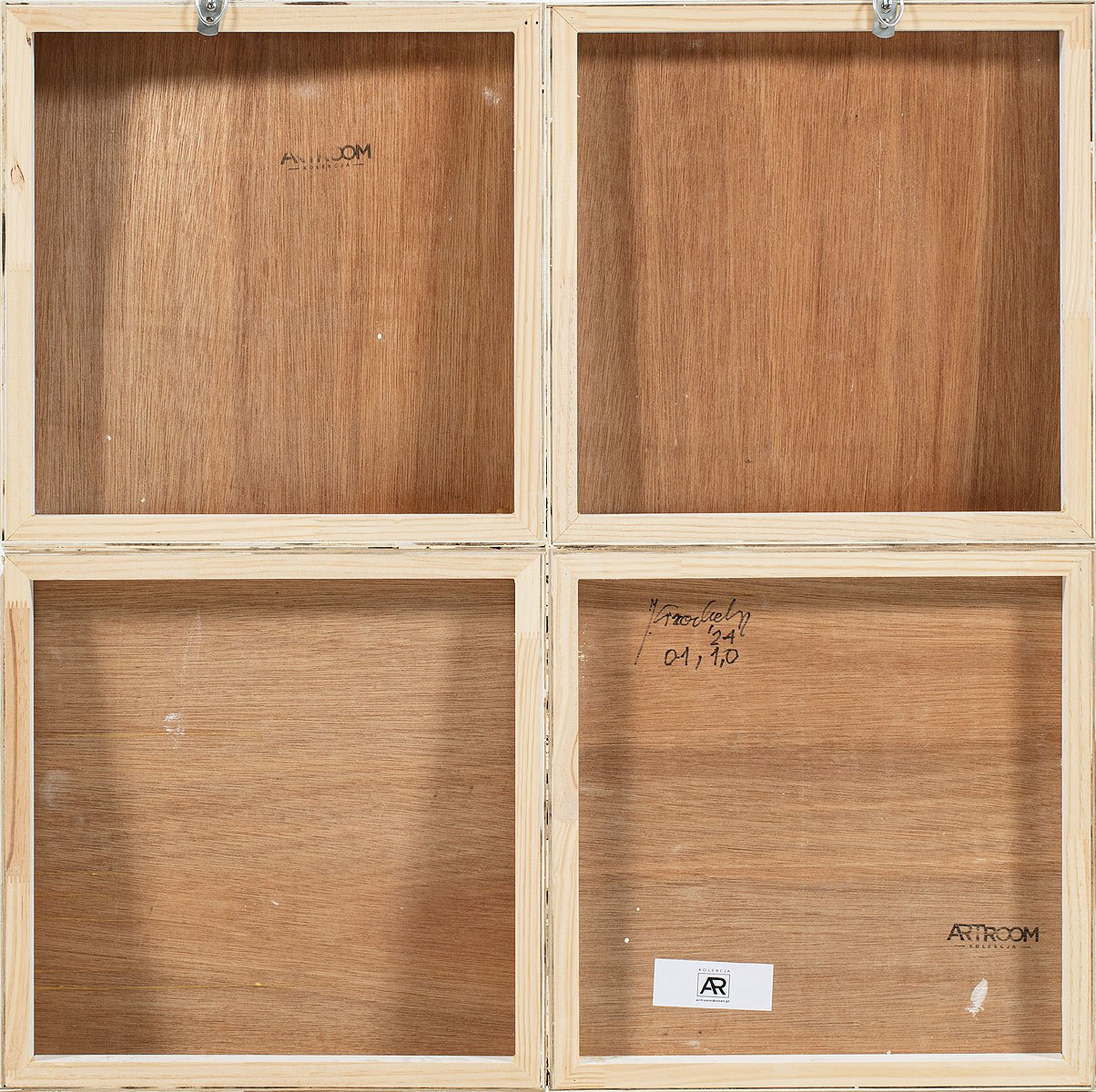
Signature: signed on the reverse: J. Grochocki / '24 / 0-1, 1.0, along with two stamps and an ARTROOM collection sticker
Provenance
Warsaw, private collection.
Exhibited
Kraków, Palace of Art, Jerzy Grochocki. 01 – 1.0 from the Art Room Collection 2018–2024, June 6, 2024–June 30, 2024.
Bibliography
Małgorzata Bojarska-Waszczuk, Jerzy Grochocki, Jerzy Grochocki TIMES | SPACES [exhibition catalog], BWA Art Gallery in Olsztyn, Olsztyn 2020, p. 115 (cf.).
Jerzy Grochocki’s art is a synthesis of Constructivism, Concrete Art, and Minimalism. Since the 1970s, he has been creating works based on four fundamental concepts of form—the plane, the square, the line, and the point—as well as four colors: black, gold, silver, and white. Together, these form a system: the Four Signs of the Plane and the Four Areas of Space. His compositions, based on a square grid and constructed according to mathematical rules, explore the theme of space. The transition from a two-dimensional image to three dimensions results from the artist’s use of mathematical and numerical sequences.
Grochocki’s reliefs are open forms featuring protruding elements and horizontal and vertical lines. They are characterized, on the one hand, by precision and order, and on the other, by harmony, asceticism, and poeticism. The artist admitted that in his work he is guided by a quest for unambiguity through the synthesis and simplification of form. The elimination of intermediate colors led to the unification of the four extremes. Among these, white plays a unique role in Grochocki’s relief art, as it symbolizes wholeness, embodying the entire color spectrum, maximum energy, and movement. Furthermore, white enhances the impression of space and the purity of form. Light plays a special role in the white reliefs. As it reflects off their surfaces, it creates subtle shadows that shift throughout the day, altering the visual perception of the composition.










