
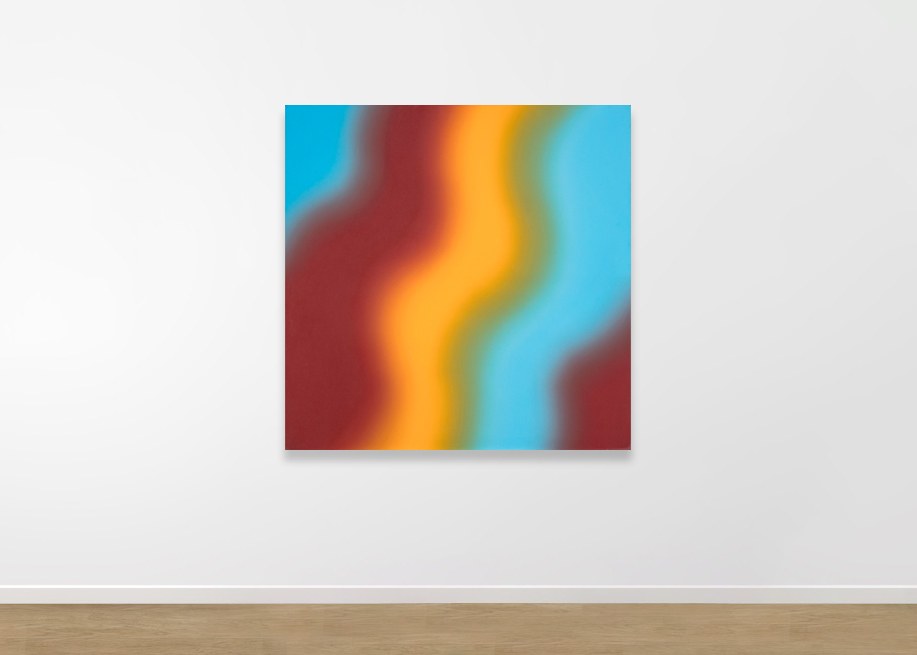
Dimensions: 127.5 x 127.5 cm
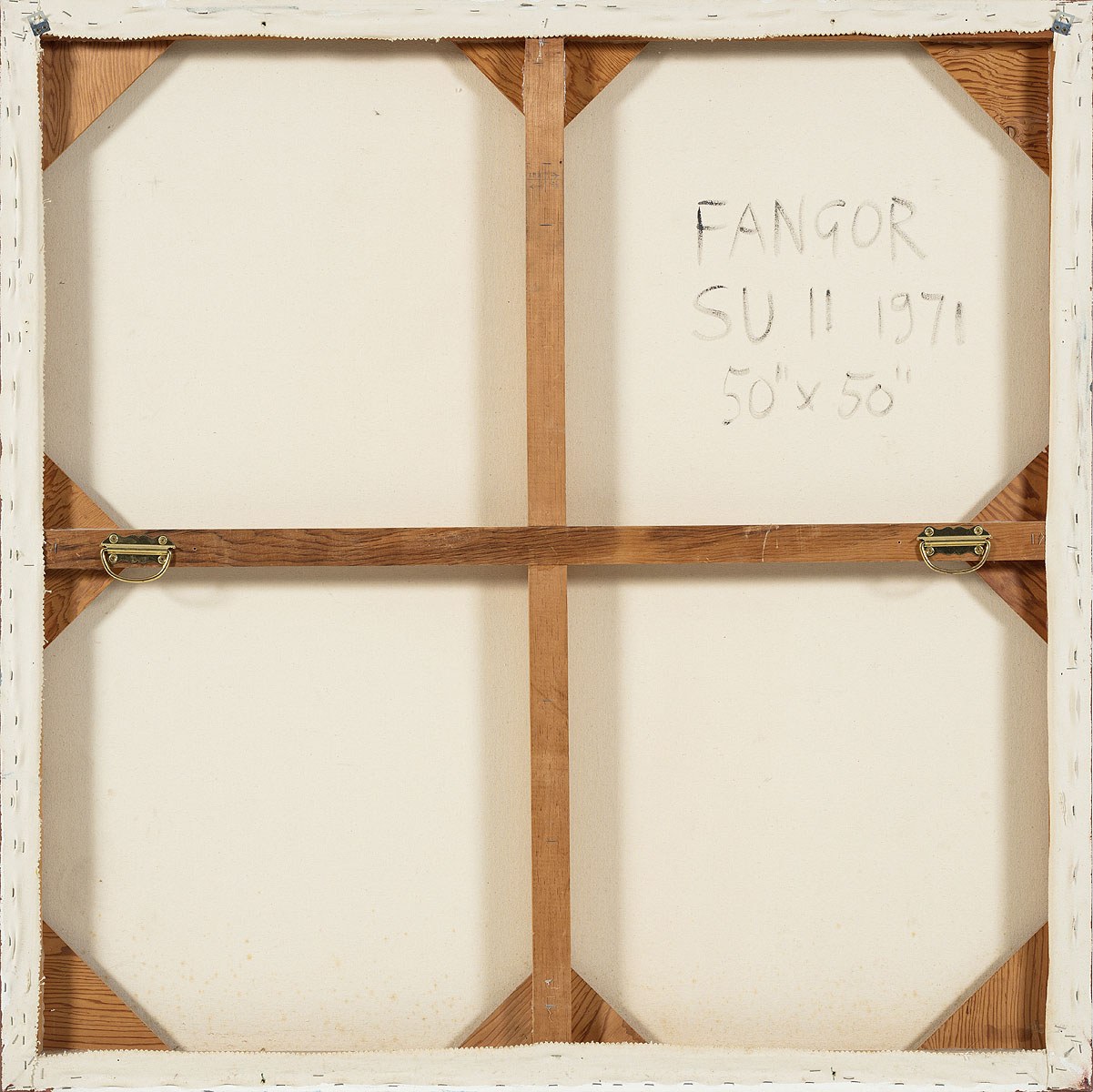
Signature: signed on the reverse: FANGOR / SU 11 1971 / 50" x 50 "
The object is accompanied by the author's confirmation of authenticity dated 2010.
Provenance
Poland, private collection USA, private collection New York, Hale Allen (1973) New York, Chalette International (1973)
Exhibited
New York, Chalette International, Fangor, November 17-December 17, 1973.
Reproduced
Szydłowski S. [ed.], Fangor. Space as play, published by the National Museum in Cracow, Cracow 2002, pp. 8-9.
Literature
Rosiak M., Immortality of the Image, "Arteon" 2005, no. 9, pp. 24-27. Catalogue raisonné, website of the Wojciech Fangor Foundation, item 857.
Wojciech Fangor's op-art painting is his trademark. After emigrating to the United States in the 1960s, the artist achieved long-awaited stability. He was able to paint in peace. He also gained a growing clientele thanks to his numerous contacts with American galleries, starting with New York's Galerie Challete. Its owner, Artur Lejwa - a Jewish art dealer of Polish origin - skillfully supported the young artist, not only by organizing exhibitions and arranging the sale of paintings, but above all by introducing Fangor's name into circulation. These activities resulted in great reviews and successes, such as the artist's solo exhibition at New York's Guggenheim Museum in 1970. About the painter's art, the museum's director wrote: "The primary reactions to the work of Wojciech Fangor are the visual pleasure emanating from the vital, painterly surface, and curiosity about the technical means by which the artist proposes his intriguing relationship between color and space" (Fangor [exhibition catalog], published by The Solomon R. Guggenheim Foundation, New York 1970, p. 5).
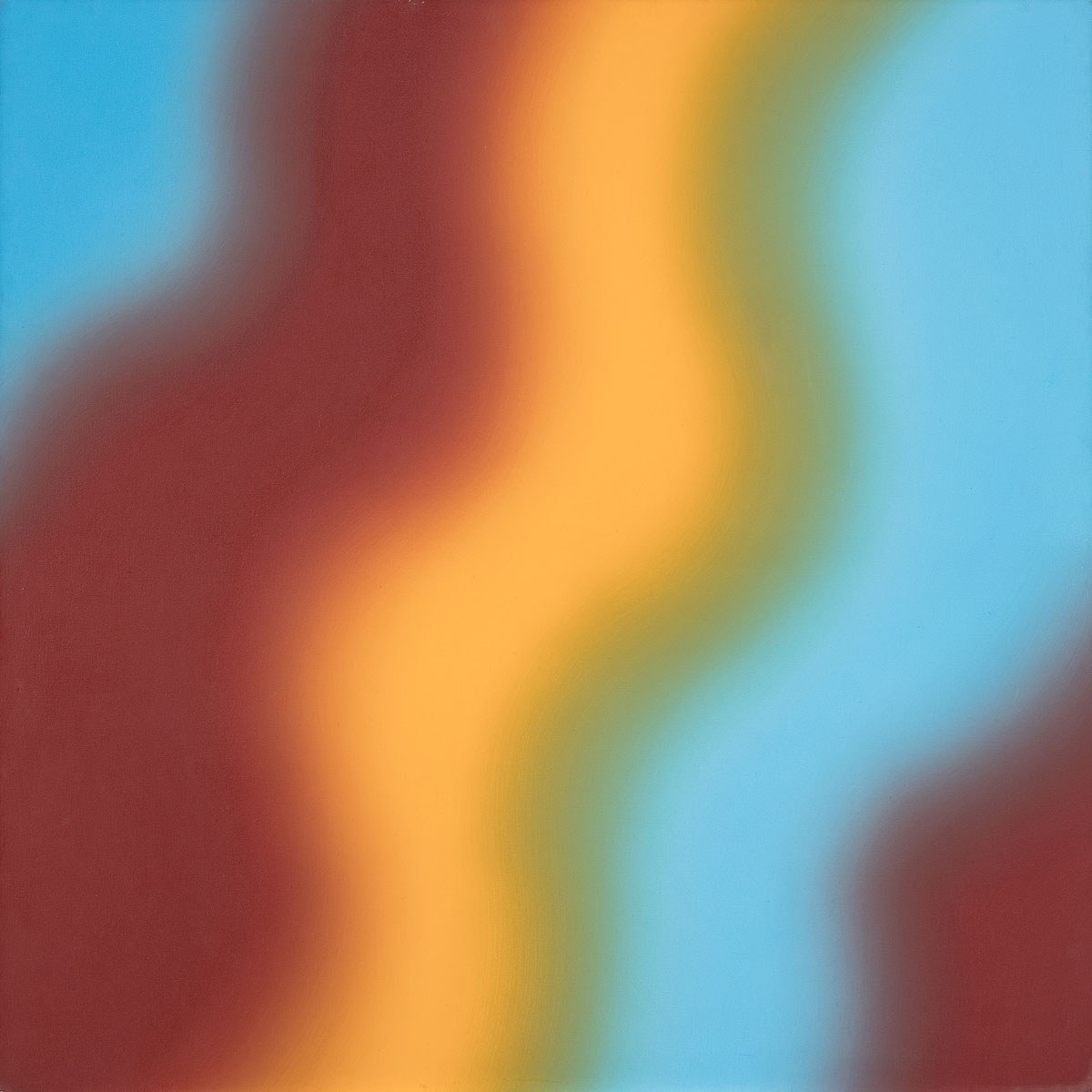
The first edgeless forms the artist used were circles and ellipses; a little later, waves appeared. These opened up new possibilities for Fangor, since the wave as a form had no beginning or end. It flowed freely through the painting, causing yet another kind of optical impression from the circles pulsating inward. With the use of the wave, the painter increased the formats of the works, moving away from the square to rectangular looms, following, as it were, the movement taking place inside the canvas.
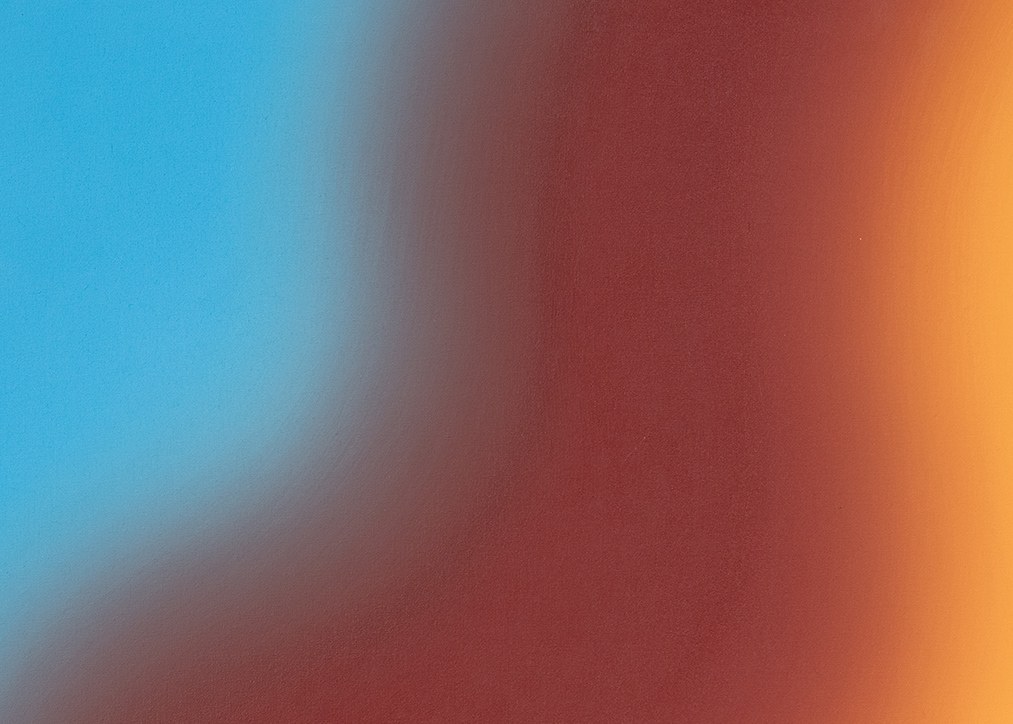
The presented "SU 11" was painted a year after Fangor's famous solo exhibition at New York's Guggenheim Museum. Maintained in contrasting tones, the painting delights with delicate barely noticeable transitions between individual shades of saturated blue, brick red, intense yellow and soft green. This intermingling of designated colors sets the picture plane in motion, and the opposing waves pulsate, moving across the canvas. The composition is characterized by shimmering, perfectly worked surfaces and delicate, blurred modeling, alluding to Leonardo's sfumato. "The eye tries (...) to "organize" and surround a given view, which escapes simple, logical divisions and - with a pulsating motion - creates the illusion of different levels of depth. The nature of human vision, however, is oriented towards the search for a sharp, clear view, with a clear outline of individual forms, guaranteeing a sense of their real presence. Formal and color arrangements (...) this impression of real presence, however, casts doubt on it, creating a field of expansion of optical effects, which superstructure themselves over the elements that are actually present" (Smolińska M., T pulse of color vibration or remarks on how the works of Fangor and Nowacki measure each other's pulse, [in:] Seeing clearly in delight - Fangor/Nowacki, exhibition catalog of the National Art Gallery, Sopot 2011, p. 9). Fangor provokes the viewer to be active in constructing what can be seen in the painting.