
Dimensions: 100 x 81 cm
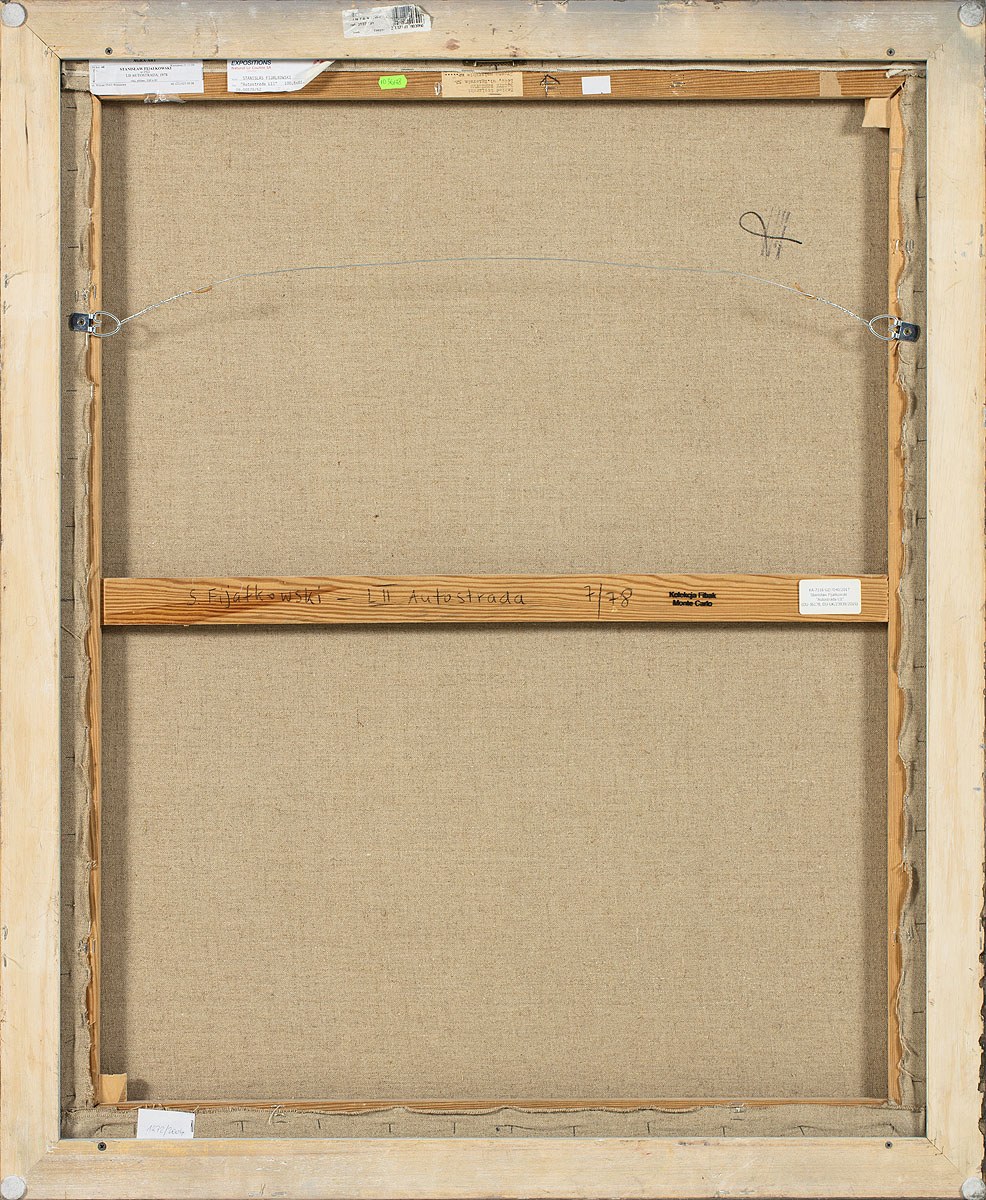
Signature: signed on the stretcher: S. Fijałkowski - LII Autostrada 7/78
Provenance
Warsaw, Polswiss Art private collection, auction 08.12.2020, item 087 Warsaw, Monte Carlo private collection, private collection Warsaw, Agra-Art, auction 21.11.2004, item 60.
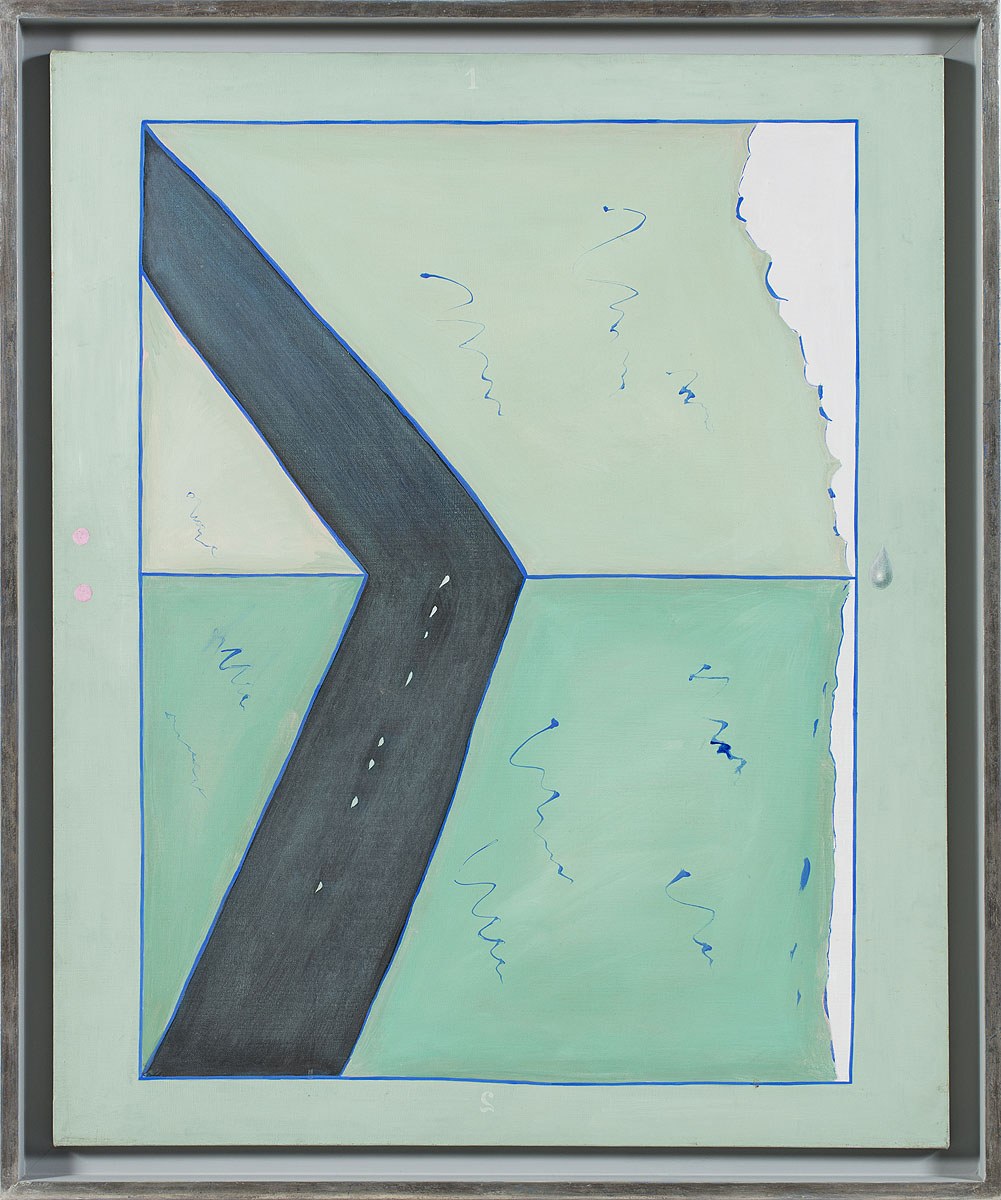
One of Stanislaw Fijalkowski's most recognizable series of paintings, "Highways," was created starting in the 1970s. Numbering more than 100 paintings, it refers to the contemporary symbol of the Old Testament Jacob's Ladder. The story described in the Bible tells of a vision that a man saw in a dream. He saw a ladder that connected heaven and earth and on which angels could descend from heaven, and at the top of it stood Yahweh God. The motif of Jacob's ladder has been a frequent theme for artists throughout art history. The parable inspired, for example, the Romanticist William Blake and the Symbolist Marc Chagall. Fijałkowski saw in Jacob's vision a story about the connection between spirit and matter, the spiritual world and reality. He was looking for the spiritual element because, as he himself said: "art is also a kind of practicing metaphysics, a special form of philosophizing. In today's world, which has lost religious sensitivity, this sensitivity to the spiritual world or metaphysical feeling - as Witkacy used to say, art provides some of the experiences that religion used to provide" (Fiajłkowski, Gierowski. Visions of Painting, published by the State Art Gallery in Sopot, Sopot 2002, p. 12). Fijałkowski called his search for the spiritual element the secular equivalent of theology, and the motif of the road became a symbol of this search for him. He began working on the theme of "Highways" and continued the series for many years. Individual canvases usually consist of strips that intersect at different angles. Sometimes the composition "complicates" taking the form, as in the case of the work on offer, of a black band of asphalt road, which breaks down intersecting green strands of earth. The choice of colors was never haphazard - while in graphic technique Fijałkowski most readily used black and white, in painting he liked to use a subdued color palette in which green, blue, white and broken black played the leading role. In the construction of his compositions, the artist uses seemingly careless figures and forms - circles, ellipses and lines. They are only a means of expression for Fijałkowski, but it is the creative process itself that is most important here. According to the artist, who was an heir to the thought of Władysław Strzemiński, the concept of meaning comes later, the meanings are born in the process of painting, and are verified at the very end. The process is therefore closely united with life. "Painting for me is a technique of concentration, perhaps similar to yoga," the artist said. - It is a method of harmonizing the image of the world with a person's inner life. It seems to me that at the moment of truly creative involvement, other planes of reality open up to us." (Waller M., Stanisław Fijałkowski, published by the National Museum in Poznań, Poznań 2011, p. 64).










