

Dimensions: 39 x 23 x 40 cm (height with base: 44 cm)
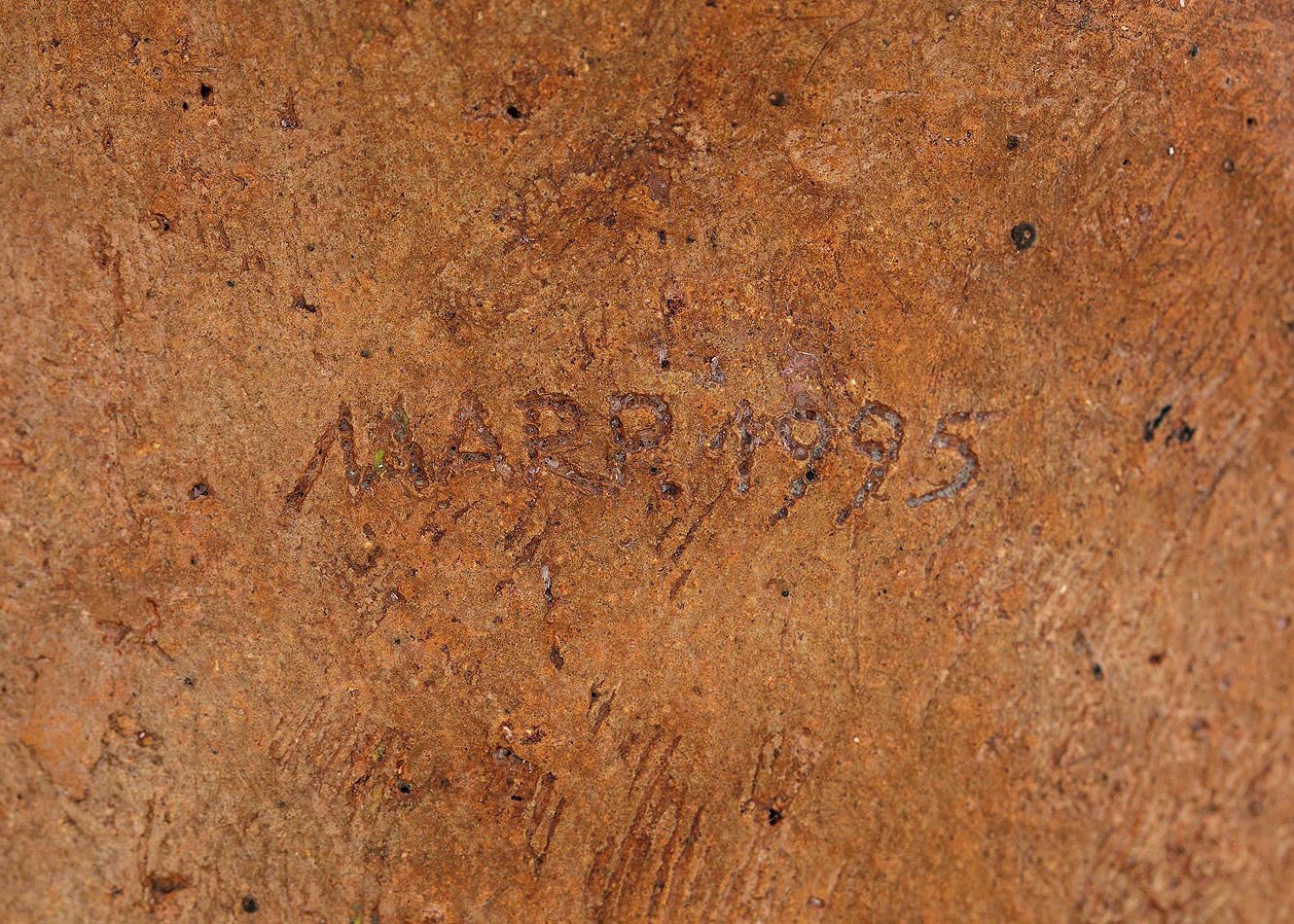
Signature: signed on the back: MARP. 1995
Provenance
Owned by the artist.
Exhibited
Zielona Góra, OZ ZPAP Gallery, “60 Years of the Zielona Góra District of the Association of Polish Artists and Designers,” June 12–26, 2015.
Reproduced
Antosz, K., “60 Years of the Zielona Góra District of the Association of Polish Visual Artists” [exhibition catalog], OZ ZPAP Gallery, Zielona Góra 2015, unnumbered page.
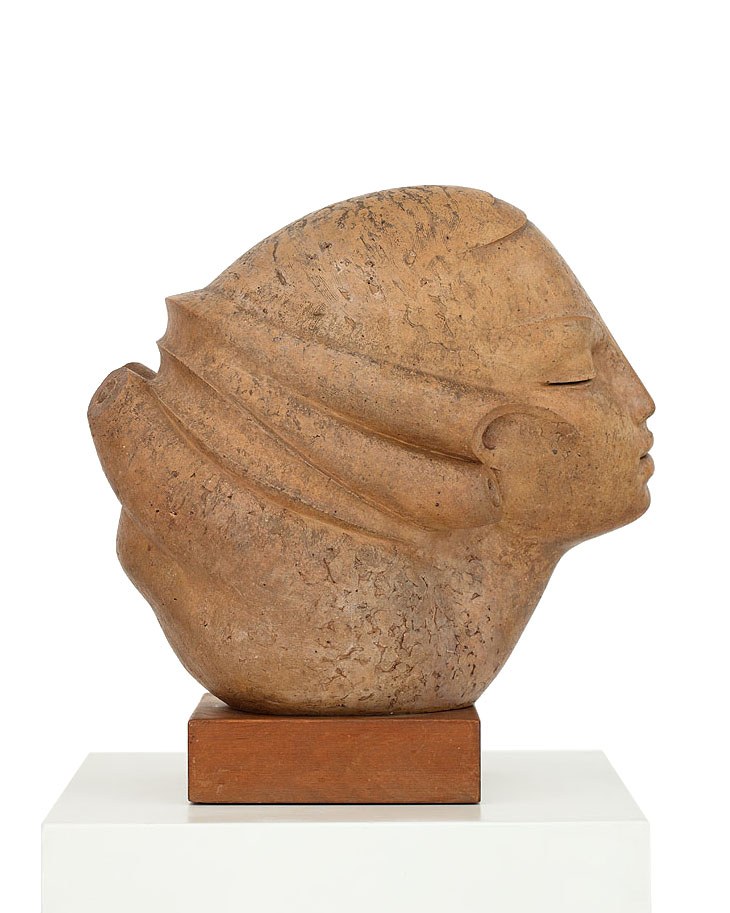
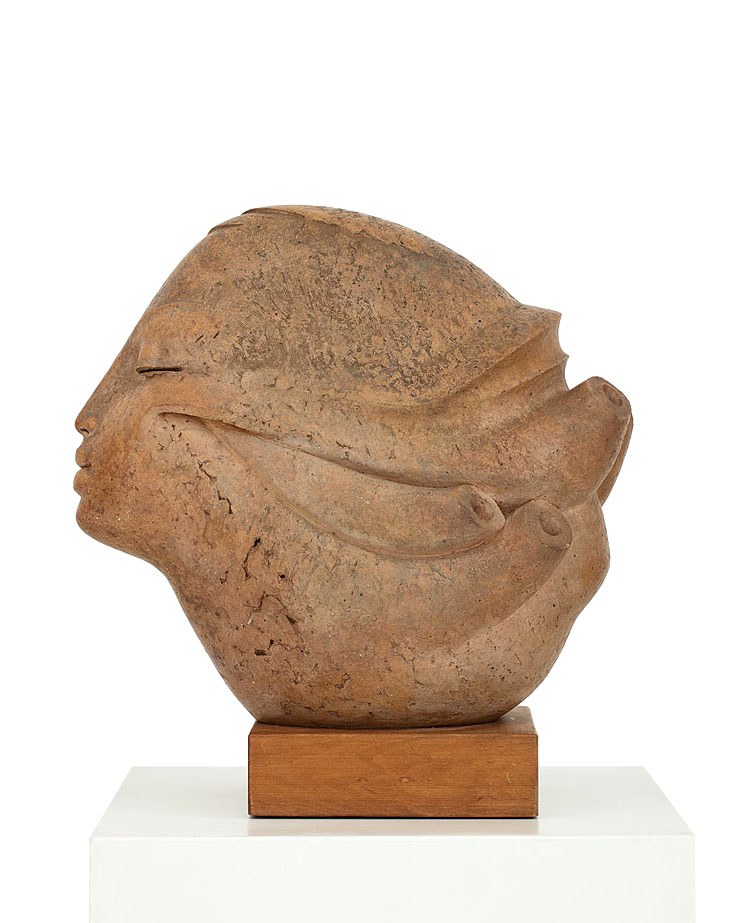
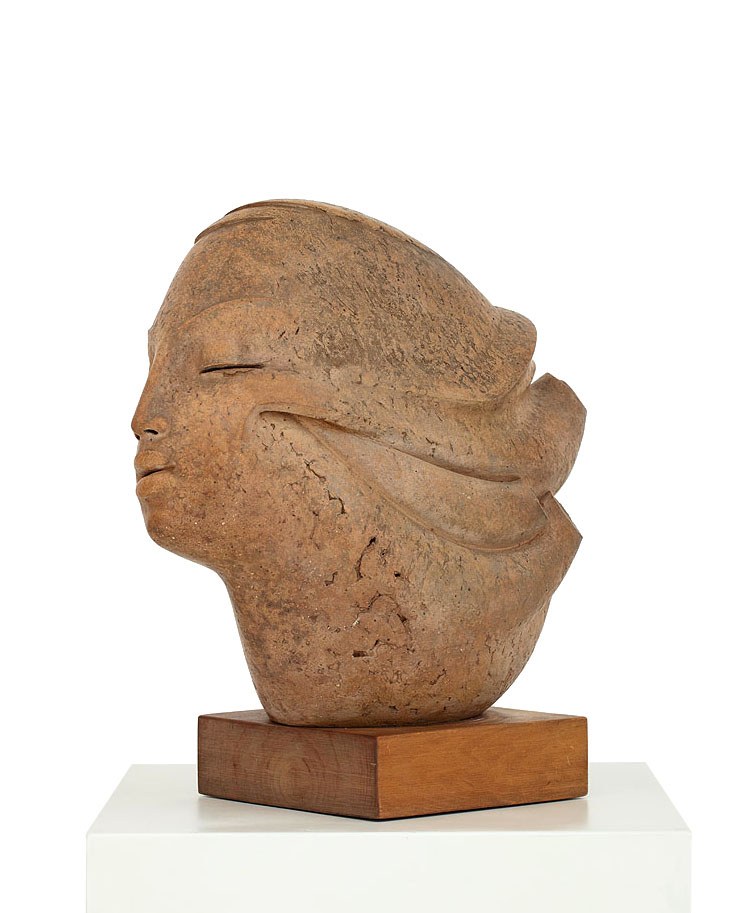
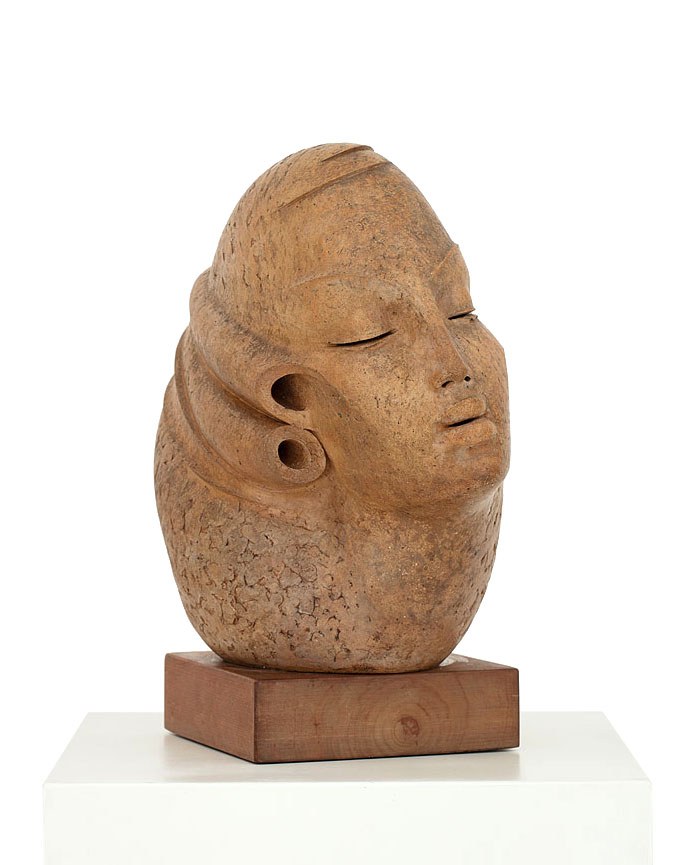
This subtle female face, created in 1995 by Marek Przecławski, demonstrates the artist’s exceptional ability to capture both dynamism and beauty and elegance in a single form. When creating female portraits, the sculptor readily turns to a unique regional material—Gozdnica stoneware. The presented “Face II” reflects a synthesis of classical aesthetics and the Art Deco style, synonymous with geometric order, symmetry, and distinct contours.
The work demonstrates a masterful use of contrasting textures through the non finito technique. The perfectly smooth, polished, feminine face and geometrically shaped hair are juxtaposed here with the rough, porous area of the neck. The hairstyle is rendered in arched waves that resemble architectural grooves or aerodynamic streamline elements. The use of a raw form allows the delicate face to emerge from the unbroken mass of material. This causes the sculpture to lose its static character—the viewer gets the impression that they are participating in the process of the figure’s birth, which comes to life before their eyes.
Marek Przecławski focused on conveying a deep, inner calm. The forehead, which flows into a perfectly straight line of the nose, the strongly defined, arched eyebrows, and the almond-shaped, smooth eyelids introduce order, balance, and classical harmony into the composition. The half-closed eyes and gently parted lips draw the viewer into a state of contemplation and tranquility, while maintaining a soothing, stable mood.
This tranquility is most fully manifested in the portraits of women, which play a central role in the artist’s body of work. For the sculptor, femininity became the primary vehicle for emotion, and his wife Ewa was his most important inspiration in this regard. Her role extended far beyond traditional posing. Marek Przecławski immortalized his wife’s image directly in another stoneware work titled “Ewa” (1990), which serves as a personal tribute to his beloved. It was Ewa Przecławska who also gave the alternative, symbolic name “Nowavita” to one of her husband’s most famous three-dimensional works. This work, more widely known in the public sphere as “The Textile Worker,” closely links the feminine motif with the region’s history and has become a permanent fixture in the landscape of Zielona Góra.










