Dimensions: 107 x 36.5 cm
Provenance
Poznan, private collection
Reproduced
P. Sosnowski et al. [compiled], Roman Opałka. Catalog of early works, Opałka Foundation, Warsaw 1998, p. 20.
In 1965 Roman Opałka made a radical decision to devote his entire oeuvre to one life's work - counted paintings. From then on, all his works were subordinated to the counting program, starting with "OPALKA 1956/1". On gray canvases he wrote down with white pigment successive moments of time flowing by, and the next note became a little brighter than the previous one. Today, for most viewers, Opalka is associated exclusively with counted paintings. However, before the idea was born, the painter had already been active in the artistic field for ten years. "At that time, such works were created as abstract paintings from the 'Greek Alphabet' series, 'Pillows' - spatial, canvas compositions, the giant wooden panel 'Integrations' and, finally, 'Chronomy' - canvases filled with a chaos of dots immediately preceding counted paintings" (Sosnowski P. et al. [compiled], Roman Opałka. Catalog of early works, Opałka Foundation, Warsaw 1998, p. 6). The artist also successfully developed in the field of printmaking.
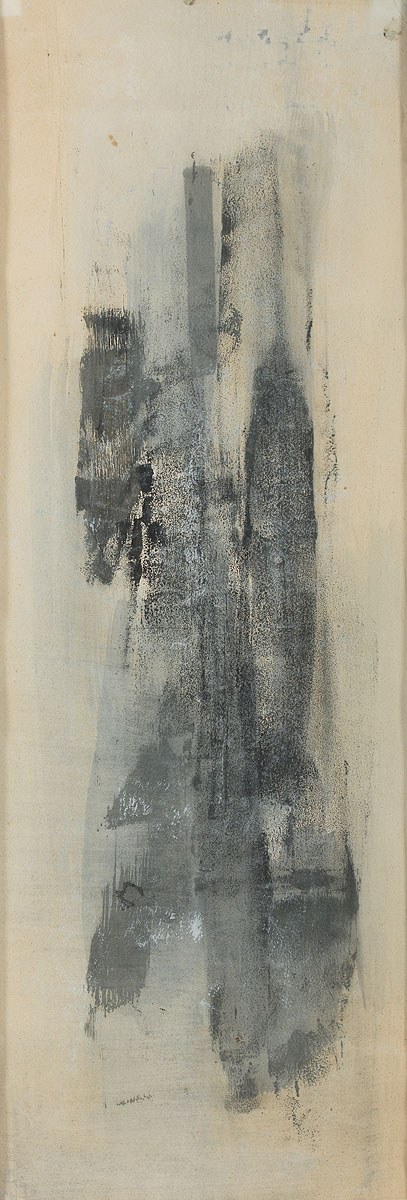
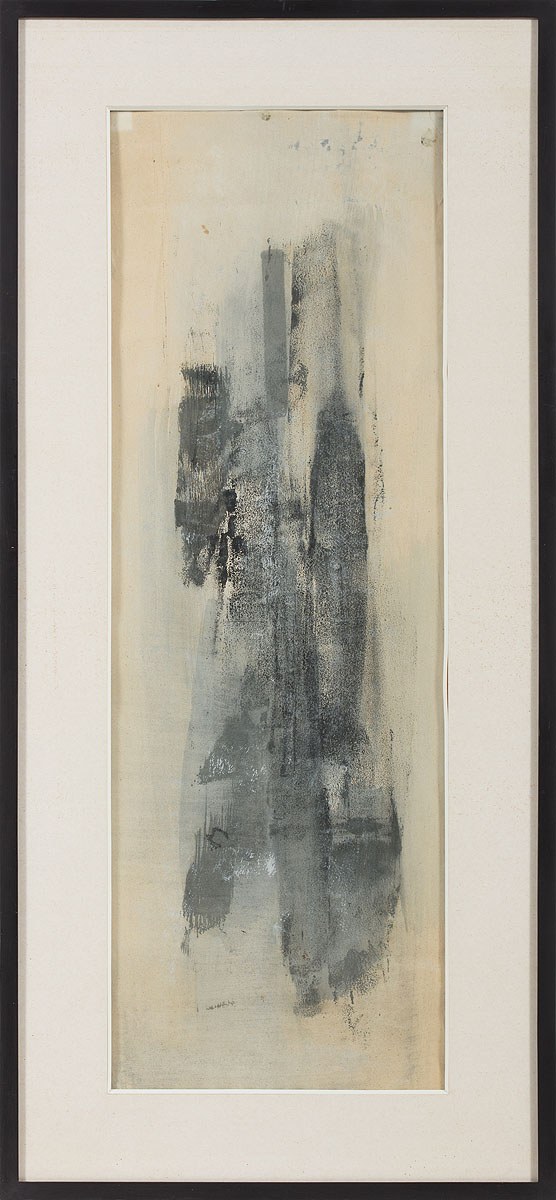
All these works, which now remain in the shadow of counted paintings, at the time of their creation were considered by critics to be finished works - worthy of being exhibited at exhibitions. For Opałka, however, they were only a pathway to his famous program. The offered painting from the series "Tactile Study" belongs to the group of these early compositions, through which we can explore the master's technique. The work is an interesting example of Opałka's painterly explorations, confirming that the artist: "does not submit to the prevailing canon and always tries to solve his own artistic problems" (Sosnowski P. et al. [elaborated], op. cit.).